

Giving your puppy the right nutrients is all about setting them up for success. Not only does good nutrition aid in their growth, but it also boosts their digestion, sharpens their little minds, and even helps with behavior. It’s kind of like feeding a future rock star, making sure they have everything they need to shine.
When picking out food, look for labels that meet AAFCO standards. These are like the gold stars of dog food, ensuring your puppy’s chow has the right balance of proteins, fats, vitamins, and DHA. Trust me, they’ll need it as they zoom around with all that puppy energy.
Got a large-breed pup? They grow differently than smaller ones. So, you’ll want to dive into those large-breed formulas that keep their joints in check while controlling their growth rate. It all comes down to preventing any ouchies in the future!
Think of nutrition as the backstage crew for your puppy’s growth journey. You might not see the direct effects right away, but trust me, it’s working hard behind the scenes to support every woof and wag.
Designing an Age-Appropriate Feeding Schedule
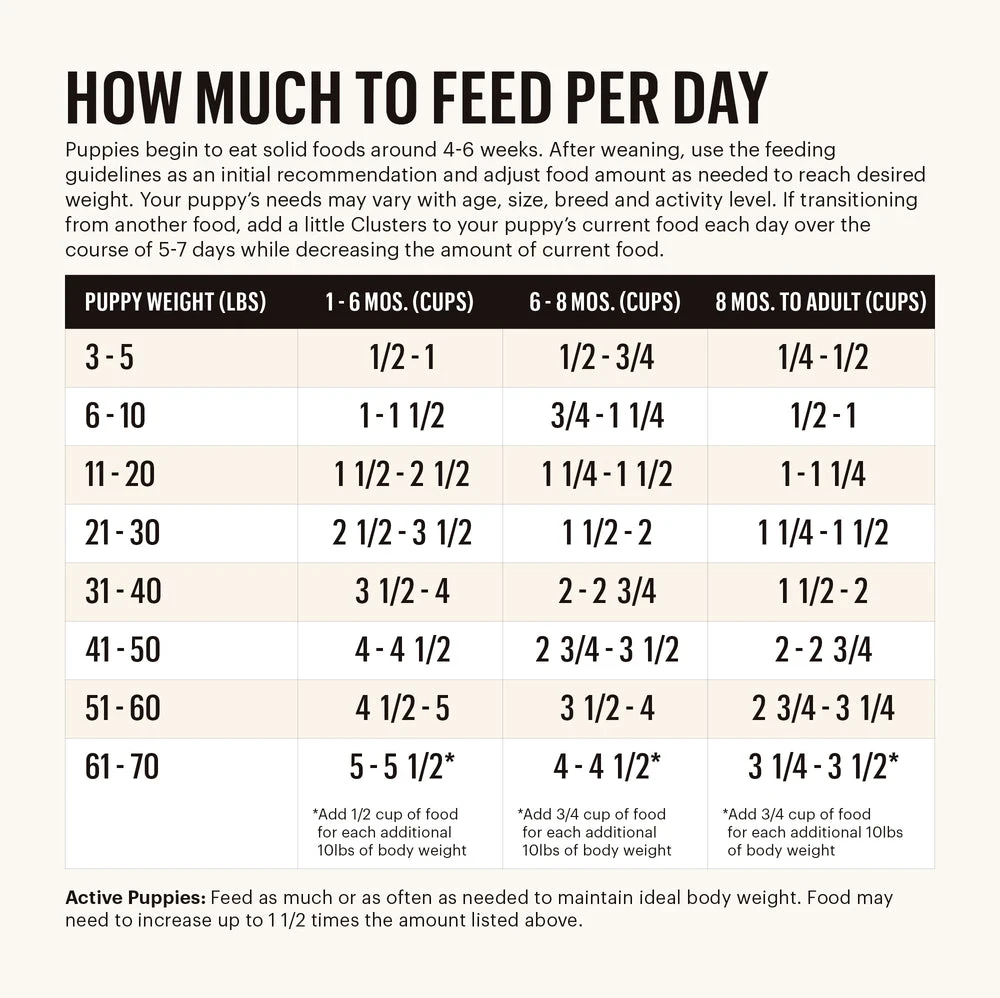
Puppies grow like weeds, but not all at the same pace. Setting up a meal schedule is like giving your pup a routine they can count on. Early in life, meals need to roll out frequently—think of it as training that tiny tummy for bigger things ahead.
From day one to about four weeks, it’s all about mother’s milk or special milk replacers, every 2–3 hours. Then come the big leagues at around four weeks when you start introducing softened puppy food during the weaning phase. Four to five mini meals a day gets them used to the idea of eating solid—and yummy—stuff.
By the time they hit eight weeks, dialing it back to three to four meals helps balance out their energy bursts. Tailoring meal plans based on breed means big-time. For instance, larger breeds might eat a bit more due to their size, while some small breeds need more frequent meals to keep them full and fueled.
Want to help with house training? Regular meal times are clutch. They help your puppy develop a routine, making potty times a bit more predictable. Consistency really is the name of the game here, helping you and your furry buddy get into a good groove.
Effective Portion Control and Monitoring Growth
When it comes to feeding your puppy, less can sometimes be more. Serving up the right portions is like providing just the right amount of fuel—not too much, not too little. This helps your puppy stay healthy and prevents any pudgy problems down the line.
Feeding charts on the packaging can act as a pretty good guide, but your pup might not fit the mold perfectly. It’s about finding that sweet spot where their ribs are easy to feel but not visible. If your puppy is more beanbag than bean sprout, adjusting portions is a solid move.
Rapid growth might sound cool, but steady growth is what you’re really shooting for. Oversized portions can lead to unhealthy weight gain, which is the last thing you want for those growing joints.
Free-feeding—letting food sit out all day—might seem like an easy strategy, but it often leads to overeating. Measuring meals helps keep things in check. Picking up the bowl after meal times helps establish a routine and controls the calorie intake. And hey, it keeps things tidy too!
Progressing to Adult Food and Additional Feeding Tips
Switching your pup to adult food is like stepping them up to the big leagues. But timing is key. Most pups are ready once they hit about 80% of their adult size, but this varies. Small breeds can switch around 10–12 months, medium breeds around 12–15 months, and those large breeds may hold out till 15–24 months.
The transition itself is a gradual dance. Mix their current puppy food with increasing amounts of adult food over several days. That keeps their digestion smooth, so you’re avoiding any tummy troubles.
Sticking to meal times and clearing away uneaten bits after 15–20 minutes helps maintain discipline and control. It’s about setting expectations and getting into that predictable groove.
Treats are okay, but let’s not go overboard. Too many can mess with their balanced diet. Steer clear of table scraps to keep them from developing bad habits.
Hydration is often overlooked, but fresh water is just as crucial. Keep it clean and always available. Supplements aren’t usually necessary unless your vet specifically recommends them, so stick to the quality food. Regular vet check-ins make sure everything’s on track and will give you peace of mind.
Here’s a little transparency: Our website contains affilliate links. This means if you click and make a purchase, we may receive a small commission. Don’t worry, there’s no extra cost to you. It’s simple way you can support our mission to bring you quality content.